The drying process
Structural Drying in Everett, WA
Surface drying makes a room look finished while the framing stays wet. Structural drying measures the materials and keeps the equipment running until the readings, not the calendar, say the house is dry.
(888) 509-1696Get emergency water extraction started in Everett- 24/7 dispatch
- IICRC S500 drying standard
- Truck-mounted extraction
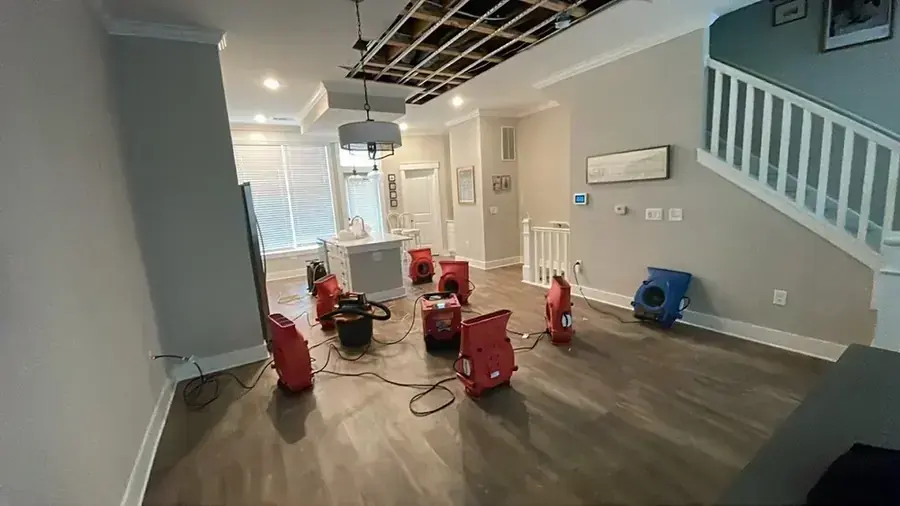
Do this now
What to do first after wet framing and floors in Everett
Stop the water source
Drying cannot finish while new water keeps arriving.
Leave equipment running
Turning off air movers or dehumidifiers resets progress.
Keep windows closed
Damp outdoor air works against the dehumidifiers most of the year.
Keep interior doors as set
The drying team arranges doors to control the airflow.
How the work is done
How structural drying & dehumidification is handled in Everett, WA
- 01
Moisture map
The tech who does the walkthrough records every wet reading on a floor plan before equipment goes down.
- 02
Size the equipment
Air movers and dehumidifiers are matched to the class of loss and the room volume.
- 03
Daily readings
The drying team checks materials and air every day and adjusts the setup.
- 04
Verify dry
Equipment comes out when readings land within 2 to 4 points of the dry reference.
Typical cost ranges
What does structural drying & dehumidification cost in Everett, WA?
In Everett, WA, structural drying typically runs $1,000 to $6,000 or more. The drivers are the class of loss, the square footage, the material density (hardwood, plaster and heavy timber dry slowest) and how many days the equipment has to run.
One or two rooms
$1,000 to $2,500
- Moisture mapping
- Air movers
- LGR dehumidifier
Several rooms or a level
$2,500 to $4,500
- Cavity drying
- Daily psychrometric logs
- Multiple dehumidifiers
Dense materials, Class 4
$4,500 to $6,000+
- Desiccant dehumidifiers
- Floor drying mats
- Extended monitoring
Every loss is different. Run the numbers in the water damage cost calculator, and ask the restoration contractor who responds for a written scope after the walkthrough.
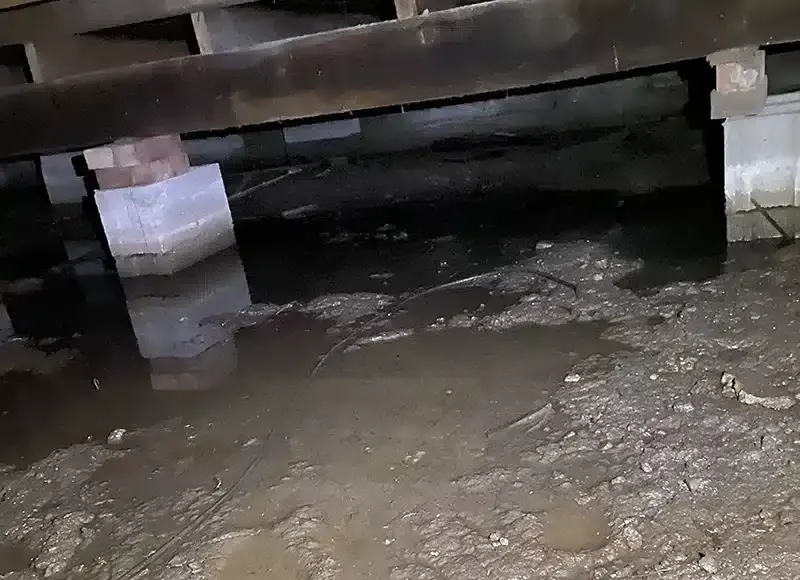
Structural drying is the part of water damage restoration that decides whether the job lasts. Water that soaked into studs, subfloor and the bottom of drywall keeps evaporating for days. If equipment leaves when the surfaces look dry, that hidden moisture stays in the walls, and in Everett's damp air it has little chance to leave on its own.
What the drying team measures
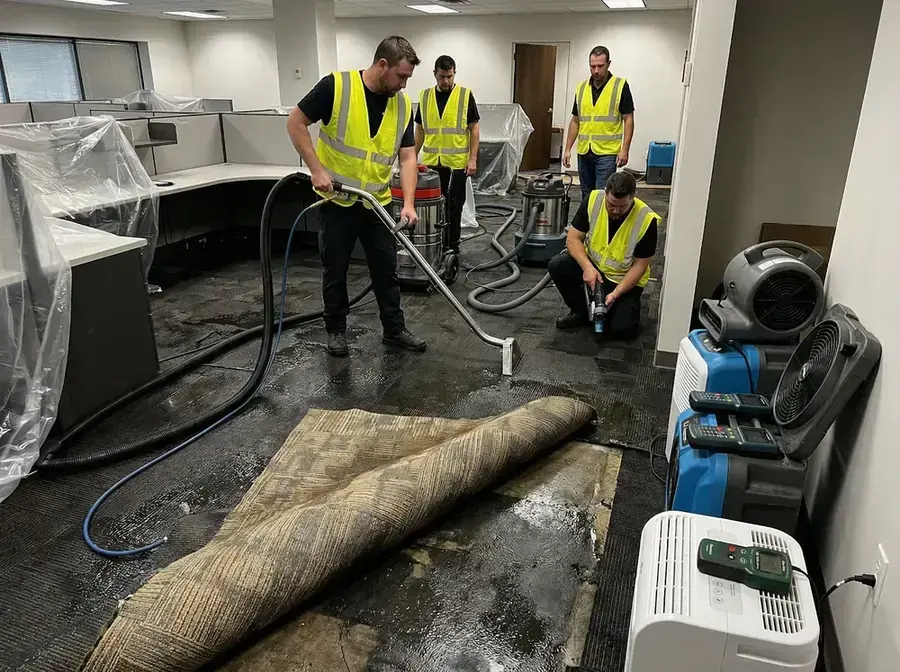
- Moisture content of framing and subfloor with pin and pinless meters
- Hidden wet areas with thermal imaging
- Temperature and humidity of the room air, recorded as psychrometric readings
- A dry reference reading from an unaffected part of the same house
How the equipment is set
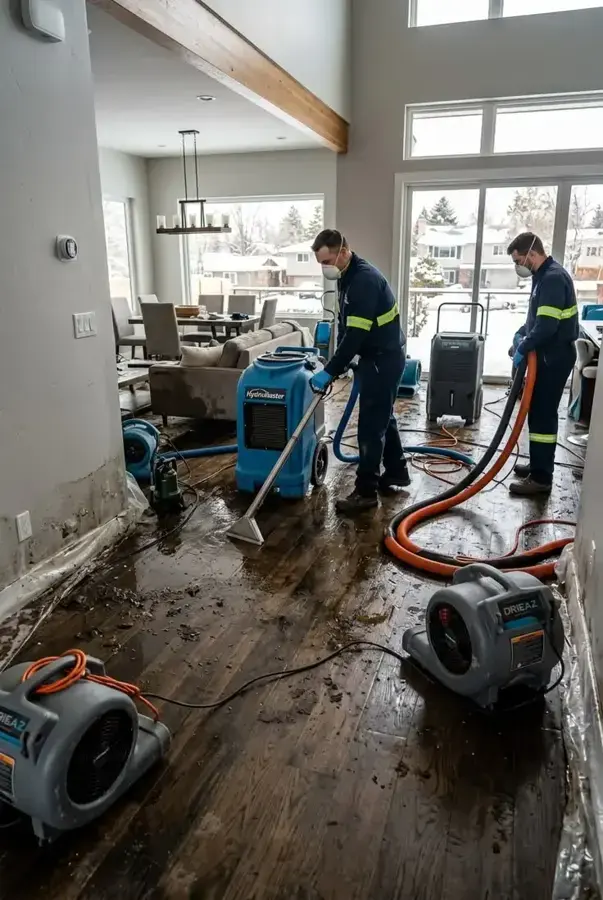
The class of water loss, Class 1 through 4, sets how much equipment a room needs. Air movers are placed to push air across wet surfaces at the room's evaporation load, and LGR dehumidifiers pull that moisture back out of the air. Dense materials such as hardwood, plaster and heavy timbers, Class 4, may need desiccant dehumidifiers or floor drying mats. The extraction step comes first so the drying equipment is not fighting standing water.
Walls or floors still wet after a leak? Call and describe what got wet and how long ago.
Call (888) 509-1696 for structural drying in EverettWhen the job is done
The drying goal is met when the wet materials read within 2 to 4 points of the dry reference, and the logs show it. EPA indoor air quality guidance explains why building materials should dry fast, and WSU Extension covers moisture control in Washington homes.
Service area
Everett service area for structural drying & dehumidification
The same response covers every Everett neighborhood and the neighboring Snohomish County cities.
The Everett restoration crew works the whole city, north Everett and Lowell through the bluffs to Silver Lake and Paine Field, plus Mukilteo, Mill Creek, Marysville, Lake Stevens and Snohomish.
ZIP codes 98201, 98203, 98204, 98206, 98207, 98208 and 98213.
See every neighborhood coveredRelated
Related water damage services in Everett
Answers
Structural Drying & Dehumidification questions, answered
What is IICRC S500?
It is the industry standard for professional water damage restoration. It sets how water is categorized, how drying is planned and how dryness is verified.
How long does structural drying take?
A contained Class 1 or 2 loss usually dries in three to five days. Hardwood, plaster and heavy timber can take a week or more.
Why is the equipment so loud and warm?
Air movers push large volumes of air, and dehumidifiers release warm air as they remove water. Both help evaporation.
Can I turn the equipment off at night?
It is best not to. Each shutdown lets moisture settle back into the materials and adds days to the job.
How do I know the house is really dry?
Ask for the drying log. It shows daily readings on the wet materials compared with a dry reference in the same house.
Is drying covered by insurance?
When the underlying water loss is covered, drying is usually part of it, and the logs support the claim. Coverage depends on your policy, so it is worth checking with your own insurer.
24/7 emergency dispatch
Dealing with wet framing and floors in Everett right now?
Water keeps moving into subfloor, framing and drywall until it is extracted. The restoration team answers 24/7 and dries to the IICRC S500 standard.